Perfect
Blue
Rising pop star Mima has quit singing to pursue acting, but her fans aren't ready to see her go. When her handlers and collaborators begin turning up murdered, reality and fantasy meld into a frenzied paranoia.
As her stalker closes in — in person and online — the threat is more real than even Mima knows. Satoshi Kon's debut feature invented a visual grammar for the dissolving self that filmmakers are still borrowing from, Aronofsky and Nolan included.
It is also, quietly, the most accurate film ever made about being watched on the internet. It came out the year before Google.
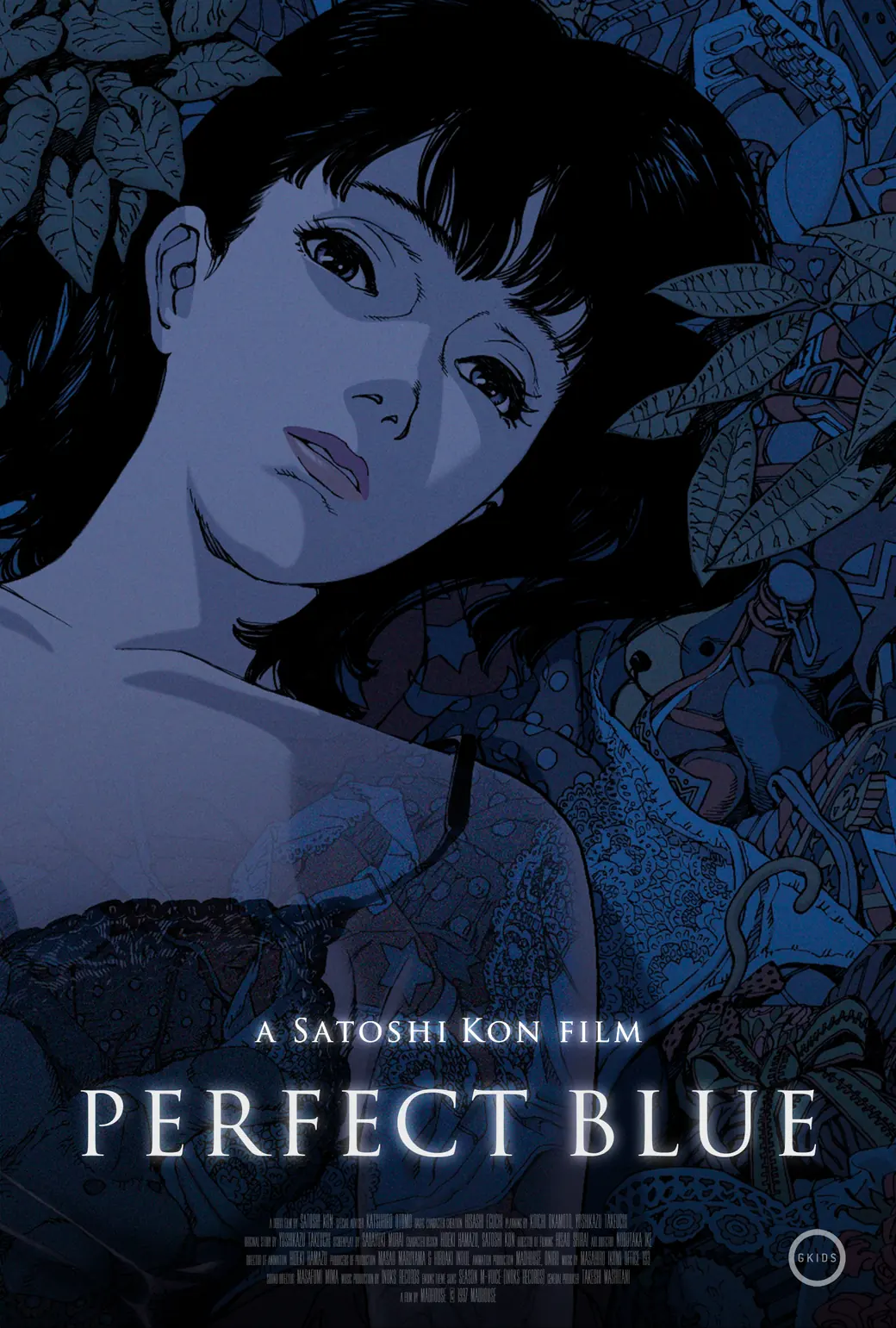
Click to look closer.
Artwork and stills © 1997 Madhouse, courtesy of GKIDS. Used with permission for this screening.
Cast & crew
| Director | Satoshi Kon | Screenplay | Sadayuki Murai |
| Original story | Yoshikazu Takeuchi | Animation | Madhouse |
| Character design | Hisashi Eguchi | Music | Masahiro Ikumi |
| Mima Kirigoe | Junko Iwao | Rumi | Rica Matsumoto |
| Tadokoro | Shinpachi Tsuji | Me-Mania | Masaaki Ōkura |
| Distributor (US) | GKIDS | Runtime | 81 minutes |
"Dark, disturbing and insanely beautiful. The Stanley Kubrick of anime." — Vice
"Masterpiece." — Dazed
Satoshi Kon
Kon got his start as a manga assistant to Katsuhiro Otomo and as an animator on Roujin Z and Patlabor 2 before his directorial debut in 1997 with Perfect Blue. He spent the rest of his career re-examining the line between reality and performance, and left behind four features and one series that all still look like nothing else.
He died in August 2010 at 46. His fifth film, Dreaming Machine, remains unfinished. The letter he wrote in his final weeks is one of the best things ever written about making things.
See it big.
A film built for a dark room of strangers reacting at the same moment.